
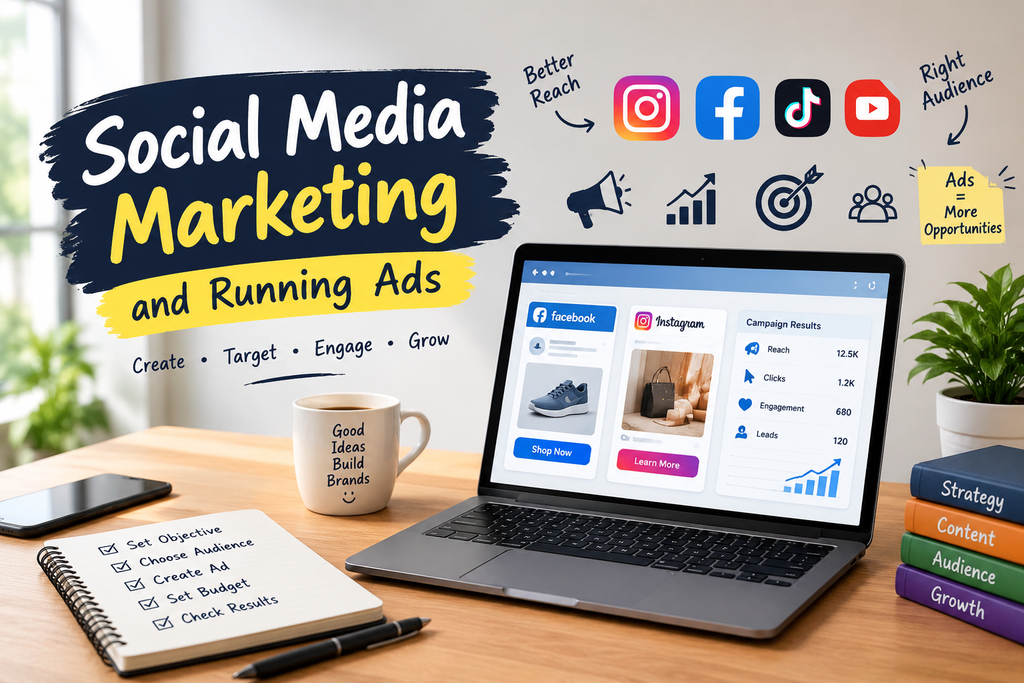
Scroll through your phone right now — go on, I’ll bet within the last hour you’ve scrolled past three or four ads without even noticing. A shoe brand popped up on your Instagram feed. actually do it. Maybe a food delivery offer sneaked into your Facebook timeline. Or a small business tried its luck with a reel. That’s social media marketing in action — and it’s changed the way businesses talk to customers.But here’s a question worth asking: why do some ads stop you mid-scroll, while others get ignored completely? Let’s break it down.
Why Social Media Marketing Matters Now
Think about your parents’ generation for a second. They ran businesses on word of mouth, a newspaper ad here and there, maybe a basic website if they were lucky. Try that today and you’ll fall behind fast. People aren’t just scrolling Instagram or YouTube to kill time anymore — half of them are quietly comparing prices, reading reviews, and deciding what to buy without ever leaving the app.For businesses, this is a huge opportunity. You’re no longer limited to people who happen to walk past your shop. You can reach someone scrolling their phone at midnight, three states away, who’s never heard of your brand before — and turn them into a customer by morning.
Organic Content vs. Paid Ads
This is where a lot of beginners get confused, so let’s clear it up.
Organic content is what you post for free — photos, reels, stories, updates. It builds trust over time and shows the human side of your brand. The catch? Reach is limited. Platforms don’t show your posts to everyone who follows you, let alone new people.
Age, location, interests, even what device they use. That kind of targeting simply isn’t possible with a newspaper ad or a billboard.The smart approach? Use both. Organic content builds your brand’s personality. Ads bring in new eyes and drive quicker results.
Running Ads: Where Most Businesses Go Wrong
I’ve seen plenty of businesses jump into Facebook or Instagram ads with high hopes, only to pull the plug two weeks later because “it didn’t work.” Usually, the problem isn’t the platform — it’s the approach
Organic Content and Paid Ads
There are different ways to promote a business on social media. One way is through normal or organic content. This means posting content without paying to promote it.
Creating an Ad Campaign
When running an ad, there are different steps. First, we select the campaign objective. Then we work on the audience and other settings. After that, we choose the budget and decide where the advertisement should appear. Finally, we add the creative.
Choosing the Audience
We can also use different audience settings depending on the campaign. The audience should be connected to the product or service. If the audience is not suitable, even a good advertisement may not give the expected result.
Ad Creative
The text should also tell them what the business is offering. For example, if a business has a special offer, the offer should be easy to notice. A simple creative can sometimes work better than one with too much information.
Primary Text and Headline
When creating an ad, we also need to write the primary text and headline.
Organic Content vs. Paid Ads
A lot of beginners mix these two up, so let’s sort it out.
Organic content is what you post for free — photos, reels, stories, updates. It builds trust slowly and shows the human side of your brand. Problem is, reach is limited. Platforms don’t push your posts to everyone who follows you, forget about reaching new people.
Paid ads flip that. You put your content directly in front of people who’ve never followed you, and you choose exactly who sees it — age, location, interests, even the phone they use. Try getting that kind of precision from a newspaper ad or a billboard.
My honest take? Use both. Let organic content build your brand’s personality over time. Let ads do the heavy lifting when you need faster results.
Here’s what usually goes wrong.
No clear goal — sales, leads, or just brand awareness need completely different strategies, and running one ad hoping to hit all three rarely works. Targeting way too broad — “everyone” was never a real audience, and the more specific you get, the better your numbers look. Weak visuals that don’t grab attention in the first two seconds, which on social media is basically a death sentence for an ad. Skipping the testing phase and running just one version, expecting magic. And ignoring the landing page entirely — a brilliant ad sending people to a slow, confusing website loses the sale anyway, no matter how good the ad was.
A Simple Way to Approach Ad Campaigns
Don’t overthink this when you’re starting out. Here’s a basic structure that actually holds up.Sounds almost too simple, doesn’t it? That’s usually the point. The businesses that struggle aren’t skipping strategy — they’re skipping patience.